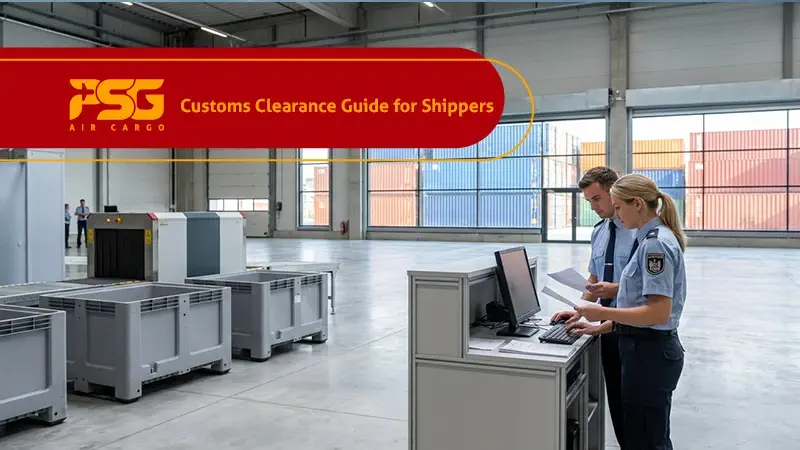
Customs clearance guidelines for shippers have always been one of the most sensitive aspects of the export process. Therefore, if you are a business owner, regardless of the scale, it is essential to understand the customs clearance process, as even a minor mistake can lead to penalties and fines. If a problem occurs during the clearance stage, whether the goods are shipped by air or sea, all previous stages are affected, potentially causing the shipment to remain in customs for days or even weeks. In today’s international trade, where speed and accuracy are of the utmost importance, the shipper must know exactly what steps are ahead and how to get the goods to the final destination safely and without any hassle. This article explains every detail you need to know about customs clearance, including the process steps, required documents, and the HS code so that you can have a smooth shipment.
Why is Customs Clearance important for Shippers?
When a product arrives in the destination country, it may only enter or be distributed if the documents, the goods’ value, the product type, the standards, and the legal regulations have been approved. This stage is known as clearance, and if it is not managed well, several problems may occur. Below is a list of potential issues:
- Long delays in customs
- Additional warehousing costs
- Legal penalties
- Reduced buyer satisfaction
- Damage to the exporter’s reputation in the destination market
For this reason, companies that export professionally usually have a detailed plan for this stage.
Step-by-Step Customs Clearance Process at the destination
Although customs laws vary from country to country, in practice, most processes are very similar. Here is a list of the common steps:
- Goods Arrival Registration
As soon as the shipment arrives, its information is registered in the customs system, and a warehouse receipt is issued. This official document shows that the goods have entered the customs area.
- Document Control During the Clearance
Customs officers check the bill of lading, invoice, packing list, and other documents. Any small discrepancy between these documents can cause penalties and even the goods being stopped.
- How the HS Code determines Value and Tariff
Each commodity has a global code that indicates its tariff and legal clearance procedures. Misidentification of this code is one of the most common reasons for clearance delays. Therefore, shippers need a comprehensive understanding of HS codes.
- How Shippers Pay Customs Fees During Clearance
At this stage, taxes, duties, and other customs fees must be paid.
- What Happens During Customs Inspection of goods
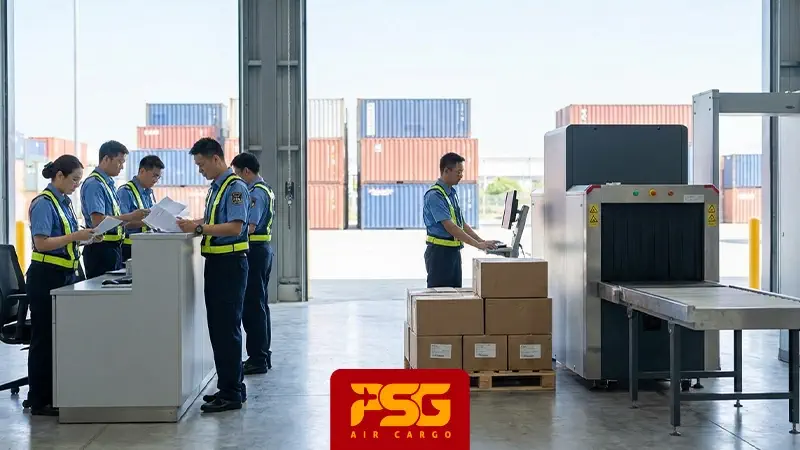
Goods inspection can be carried out manually or with scanning devices, which depends on the type and volume of the goods.
- Customs Exit Permit Issuance at the Destination
If everything complies with the laws and destination customs regulations, an exit permit is issued without issue, and the goods can be cleared.

Required Documents for Customs Clearance of Shipments
To ensure a smooth, hassle-free clearance, all required documents must be provided, as even a minor mistake can cause problems. Some of the most important documents include:
- Bill of lading
A document that specifies shipping information, weight, and route.
- Commercial Invoice
An invoice shows the actual value of the products and serves as the basis for calculating duties and taxes.
- Packing List
A packing list is a document that usually includes the number of packages, weights, dimensions, and contents of each package.
- Certificate of Origin
A certificate of origin shows in which country the goods were produced and can affect the tariff.
- Additional Permits and Licenses
Some goods may require additional licenses beyond the main export and import licence, including health and safety certifications. Additionally, some restricted goods may require specific approvals from the authorities.
Who Manges Customs Clearance for Shippers?
Customs clearance can be carried out by different parties, from the owner of the goods, the legal representative, the forwarding company, or the professional clearance worker. It is worth mentioning that in many cases, entrusting this step to specialists will prevent administrative hassles and reduce unexpected costs. At this stage, experience plays a key role, making the process effortless.
How Is Customs Clearance Cost Calculated?
The final cost of customs clearance depends on many factors. However, having an estimate before shipment helps the exporter avoid financial surprises. Here is a list of the factors.
- Value of the goods
- Tariff determined by the HS Code
- Warehousing costs
- Cost of customs clearance services
- Type of goods and the level of inspection sensitivity
The Role of Air Freight in Faster Customs Clearance
Many exporters choose air freight when time is of the essence, as this mode is often used for industrial parts, medical equipment, and high-value goods. Air cargo clearance is faster than other methods in many countries because of the following reasons.
- The information is sent before the goods arrive
- The warehousing process is shorter
- Security control is often more digital
The Most Common Reasons for Delays in Customs Clearance
Here is a list of the reasons that, in many cases, have repeatedly caused goods to stop at their destination. Preventing these errors is more important than trying to correct them at customs.
- Entering the wrong HS Code
- Discrepancy between the invoice and the bill of lading
- Lack of necessary permits
- Incomplete packing list
- Unrealistic valuation
- Late submission of documents
- Choosing an incompetent carrier
- Failure to coordinate the customs conditions of the destination
- Unsafe packaging
- Failure to pay fees on time
This is why many exporters use forwarding companies: an experienced, reliable one knows how to prepare the documentation upfront. Besides that, these types of companies understand the importance of selecting a suitable shipping route (Air, Land, Sea). Another important aspect of a forwarding company’s responsibility is its coordination with customs, informing the owner of goods of potential problems in advance, and always tracking the shipment’s status to keep the owner of goods updated. In international trade, time and reputation are more important than anything else, and using experts is generally cost-effective.
Final Thoughts
Customs clearance guidelines for shippers are an impactful part of a shipment. Success at this stage depends on familiarity with the required documents, choosing the right HS Code, compliance with destination laws, cost management, and leveraging the expertise of experts, such as PSG Air Cargo, to ensure the customs clearance process is carried out carefully and on time, without delay. This company helps choose the correct HS Code, which requires familiarity with the classification structure of goods and work experience in the field of export, because if this code is chosen incorrectly, the result can lead to higher tariff payments, re-inspection of the goods, or the shipment being entirely stopped. Thereby, working with a trusted logistics partner leads to faster delivery. In a world where competition is intense, details such as delivery speed make all the difference and help the shipper gain greater credibility in the destination market, leading to buyer satisfaction and reduced operating costs.
FAQs
How long does the process of customs clearance take?
It depends on factors such as the type of goods, the volume of customs traffic, and other factors.
Is packaging impactful on the clearance process?
Yes. Improper packaging can cause delays and additional costs.
What happens if the HS Code is incorrect?
It requires document correction and re-examination.


Leave a Reply
Want to join the discussion?Feel free to contribute!