
LCL and FCL are two shipping methods used for imports and exports in the UAE and globally. When it comes to importing or exporting goods, most people think about the price of the goods, the exchange rate, or the final profit. But in practice, one of the most important factors that can completely change the outcome of a transaction is the transportation method. Many people who have experienced delays, unexpected costs, or damage to the goods later realize that the main problem was not in the purchase of the goods, but in the incorrect choice of the transportation method. Sea freight is the transport of goods by ship and is the backbone of global trade. This method is popular due to its low cost for bulky goods, offering very high capacity, the ability to carry a variety of goods, and its flexibility in volume. Sea freight is divided into two types: full container load (FCL) and less-than-container load (LCL). In sea transportation, the two terms LCL and FCL are most commonly used, and although these methods seem simple on the surface, each has its own set of advantages, disadvantages, risks, and considerations that are essential to know. In addition to fully explaining these two methods, this article aims to address real questions and concerns people often have when choosing the best mode of transportation for their shipment.
The Definition of Less Than Container Load (LCL)
LCL or Less Than Container Load means the cargo is not enough to fill a full container. In this situation, the shipping company or freight forwarder places the cargo in a common container with other cargoes. This allows the container transport cost to be divided among several people. It is important to understand that shipping LCL is a collective process, in which your time, cost, and even risk depend on the performance and status of other cargo owners. It is worth mentioning that the LCL method is not necessarily cheap. Although LCL may seem more affordable due to the volume-based (CBM) charge, additional costs can offset this difference. The extra costs include warehousing at origin or destination, unloading, and LCL-specific port charges. Sometimes the price difference between LCL and FCL is not as great as expected. For this reason, the comparison should always be made on the final cost, not the initial rate.
Main Challenges of the LCL Method
One common complaint about the LCL method is the frequency of delivery delays, which stems from its nature. An LCL container moves when a sufficient volume of different cargoes has been collected and loaded into the container. This process might take a long time; therefore, the ship’s departure will be delayed as well. In addition, the separation process, which involves separating each cargo, is carried out at the destination. If even one of the cargoes has a documentation or customs issue, the delivery of the entire container may be delayed. This is very challenging for those for whom time is of the essence. There is also another concern: the likelihood of goods being damaged under the LCL method. This is a completely reasonable worry. As discussed earlier in LCL transportation, various goods with different packaging and nature are placed together in one container; therefore, if the packaging is not standardized or heavy goods are placed next to light goods, the possibility of damage increases. For this reason, if goods are fragile, sensitive, or expensive, it is better to either pack them professionally or consider the full container load method. Besides that, the shipping method’s impact on customs clearance is a concerning factor, and sometimes those new to this field are unaware of how it affects it. In LCL, clearance can be more complicated because multiple owners are involved, and if one of them has a problem, the others are delayed. However, in FCL shipping, because the container belongs to only one owner of the goods, clearance is usually simpler and faster.
Advantages of LCL shipping
- Suitable for small volumes of goods
- Reduced costs compared to booking a full container
- Flexibility for small and medium-sized businesses
Disadvantages of LCL shipping
- Longer shipping time due to the consolidation and separation process
- Higher risk of damage or delay
- Additional costs such as unloading and warehousing
The Definition of Full Container Load (FCL)
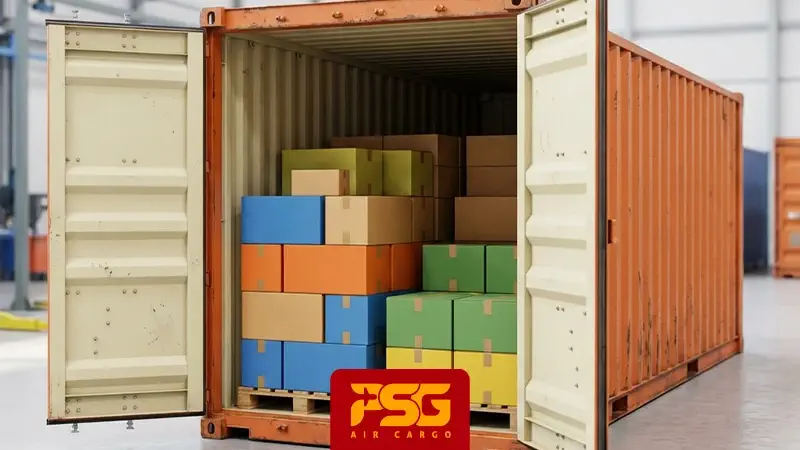
FCL (Full Container Load) is when one cargo owner occupies the entire container. The container is loaded, sealed at the origin, and opened at the destination, and no other goods are placed with this cargo. This eliminates many of the worries that may arise with the LCL method.
For many exporters and importers, FCL offers more control, greater transparency, and less stress, and they consider it a safer mode of transportation.
FCL is not only for very large loads; it is often used for bulky loads, but it can make sense even for medium loads, especially when the goods are sensitive or expensive, delivery time is critical, the market is competitive, and delays are unacceptable. In such situations, paying more for FCL is ultimately beneficial.
Advantages of FCL shipping
- Higher security of goods
- Shorter shipping time
- Reduced risk of damage and loss
- Cost-effective for large volumes
Disadvantages of FCL shipping
- Higher cost for small volumes
- Need for careful planning of cargo volume
What Factors Matter before Choosing between LCL and FCL?
It is important to understand that it is not about “which method is cheaper” or “ which method is better.” These questions alone cannot be a good guide to the choice. LCL and FCL are each designed for specific situations and become problematic when used outside their intended use. To make the right choice between these two methods, it is important to note that transportation is not just about moving goods and a simple to task to transfer goods from point A to point B. the mode of transport has a direct impact on the final cost of the goods after clearance, the time it takes for the goods to arrive at the market, the likelihood of damage or delay. Therefore, choosing between LCL and FCL is choosing between two distinct trade management styles.
The volume of the goods
This is a key factor when choosing the best method and one of the decision variables. For example, if a cargo volume is average but sensitive and fragile, or has a high value, even if LCL may seem reasonable, from a volume perspective, FCL may be a safer choice. Therefore, volume should be considered alongside other factors.
Time
Time is usually an underestimated factor. Many people do not realize the importance of time in choosing a shipping method until they encounter a delay. The LCL method is more time-consuming as it contains several cargoes with different owners, and the cargo must be collected and shipped with other shipments. If a business is such that a delay of even a few days could result in lost sales or customers, this factor must be considered in the decision-making process.
Level of control
One of the main differences between LCL and FCL is the level of control. In LCL, some of the control is out of one person’s hands because the container is shared, and the timing and conditions depend on several factors. In contrast, FCL allows you to have more control over factors such as loading time, cargo stowage, and container security. Therefore, before choosing a shipping method, this question must be asked: “How much control is needed?”
Value of the goods/ Risk tolerance
The value of the goods is not just a financial number; it also indicates the level of risk that a business can accept. If goods are cheap and generic, the risks of LCL may be acceptable. But if goods are expensive, there are no substitutes, or the customer is time- and health-sensitive, it is more reasonable to adopt less risky methods, even if they are a little more expensive.
Level of experience
This is a very important factor, as experienced people are usually better able to manage the risks and hidden costs. But for those new to the field, the intricacies of LCL can sometimes be confusing. That is why some new importers, even with smaller volumes, prefer FCL for a simpler, more predictable process.
Summary comparison between the LCL and FCL methods
| Futeares | LCL | FCL |
| Volume of goods | Less than 10–15 cubic meters | Medium to large cargo volume |
| Cost | Less for low volume | Economic for high volume |
| Transportation time | Longer
(High importance of delivery time) |
Shorter
(Not highly sensitive to delivery time) |
| Safety of goods | Medium | High |
| Type of goods | Small/Non-urgent/Durable goods | Perishable/ Sensitive or valuable goods |
| Suitable for | Small businesses/ Trial shipment of goods | Professional Importers |
How are LCL and FCL shipping costs calculated?
In LCL transportation, the additional cost is calculated based on the cargo’s space occupied or its weight, whichever is greater. If the cargo is light but bulky, volume (CBM) is the basis; if it is heavy, weight is considered. Since a cargo is shipped with other cargo in a container, the transportation company must collect it from the warehouse, pack it into the container, and separate it again at the destination. For this reason, in addition to freight costs, consolidation, separation, warehousing, and port handling are also added to the final cost. The sum of these things makes LCL suitable for small loads, but if the volume increases slightly, its price increases quickly.
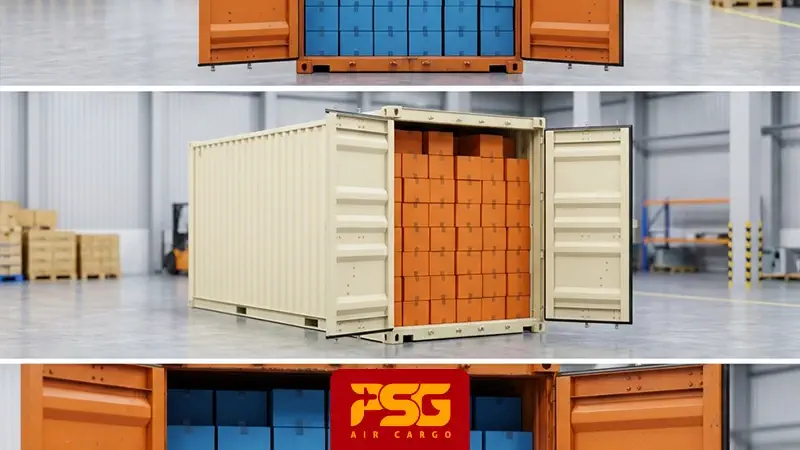
However, in FCL transportation, the cargo owner rents the entire container, whether it is half full or full (up to the weight limit). The main cost depends on the container type and the transport route. The volume and weight of the cargo no longer directly affect the price, and there are no consolidation or separation costs. Port charges in FCL are usually fixed and calculated independently of the cargo volume. For this reason, FCL is generally more economical, faster, and less risky for medium to large loads. In general, here is a list of the main factors in cost calculation for both LCL and FCL.
LCL shipping costs:
- Volume (CBM)
- Weight
- Consolidation and separation costs
- Port charges
FCL shipping costs:
- Container type (20 or 40 feet)
- Shipping route
- Freight rates
- Fixed port charges
Why is the Choice Between LCL and FCL so important?
Many people think that if the cargo volume is small, they must use the LCL method, and if it is large, they must use the FCL method; however, this simplification can be misleading. In fact, without a clear understanding of these methods, choosing the wrong option between LCL and FCL can result in higher costs, additional charges, capital losses, cargo damage, difficulties with customs clearance, customer dissatisfaction, and lost sales opportunities. For this reason, it is vital to have a deep understanding of the differences and consequences of each method. Many experienced exporters and importers admit they suffered significant losses at the beginning of their careers due to the wrong choice of transportation method.
Final Conclusion
LCL and FCL are two different ways to achieve the same goal: delivering goods from origin to destination. To make the right decision, you need to consider factors such as the volume and weight of the goods, their type, value, the time required, the budget, and even market conditions. LCL is flexible and suitable for small loads, but it is time-consuming and dependent on others. On the other hand, FCL is fast, safe, and controllable, but more expensive and requires higher volume or more capital. Understanding the differences between these two methods can help businesses control logistics costs, reduce delivery times, and improve their experience in international trade. PSG Air Cargo, as a trusted, reputable, and reliable logistics partner, helps businesses seeking to grow their brands beyond their home country and reach global markets. With this company’s help, navigating these processes becomes more efficient. Therefore, if you are a business looking to grow in international trade, working with a knowledgeable logistics company is the optimal choice.
FAQs
Which method is faster, LCL or FCL?
FCL transportation is usually faster because it does not require consolidation and segregation.
How different is the risk of damage to cargo in LCL and FCL?
In LCL, the probability of damage is slightly higher due to the movement and segregation of freight.
Are port charges different in LCL and FCL?
Yes, in LCL, port charges are usually variable and depend on cargo volume, but in FCL, they are often calculated as a fixed amount per container.



Leave a Reply
Want to join the discussion?Feel free to contribute!