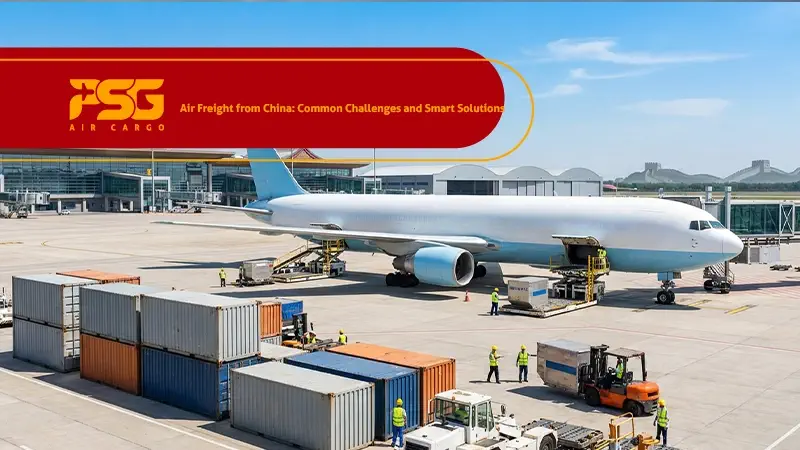
Air freight from China has become a major topic of international trade in recent years. With the speed of global markets, importers cannot afford to wait months for sea freight, especially for valuable, sensitive, time-sensitive, or urgent goods. But this method of transportation, in addition to speed and security, also presents complex challenges, including price fluctuations, commodity restrictions, customs problems, and capacity constraints at major airports in China. This article, with an operational approach, examines common challenges and offers smart, technology-driven solutions to help businesses ensure a secure, safe shipment.
The Reason Behind the Popularity of Air Freight from China
China has been the center of world manufacturing for many years. Most goods imported from several different countries, from toys and household appliances to electronics and industrial raw materials, are loaded from factories and warehouses in China. Today, many importers choose air freight for its fast delivery, better quality control, and careful inventory management. Below is a list of the other reasons behind the demand growth in air freight.
Very high delivery speed compared to other methods
- Suitable for expensive and sensitive goods
- Accurate tracking capability
- Safe transportation with very low risk of damage
- Possibility of sending light-weight cargo or samples
- No need for high minimum volumes like sea freight
But along with all these advantages, air freight also has its complexities. Recognizing these challenges and managing them demonstrates the role of a professional importer.
Main Challenges of Air Freight from China
Here are the most common challenges business owners face when transporting air cargo, especially from China.
1. Extreme fluctuations in air freight rates
Air freight rates from China are not fixed and are usually unstable. Sometimes they change even within a week. The reasons for this fluctuation are:
- Increased demand during peak shopping seasons
- Reduced flight capacity after global events
- Increased jet fuel prices
- Congestion at airports in some cities
- Chinese national holidays
Because it is not easy to correctly calculate the final price of goods, the cost of goods, or even the selling price, this is considered one of the main challenges, especially for goods with low profit margins.
2. Commodity restrictions, especially for sensitive goods
Air transport is subject to strict international regulations, and many goods must be transported under certain conditions or not at all.
Here are some examples of these challenging goods:
- Lithium batteries (Power Banks, mobile phones, laptops)
- Chemicals and flammable materials
- Sprays and liquids under pressure
- Magnets and equipment with magnetic fields
- Bulky goods with high volumetric weight
3. Challenges at Customs Clearance
If the shipping company lacks sufficient experience, these problems can cause delays of several days to several weeks. These issues include:
- Inconsistency between the actual weight of the cargo and the declared weight
- Lack of standard documents
- Suspicious value of the goods
- Requirements of special permits
- Long clearance procedures for some categories of goods
- Sudden changes in the local destination regulations
- Unforeseen warehousing costs
- Strict controls for electronic goods
4. Flight delays and capacity shortages
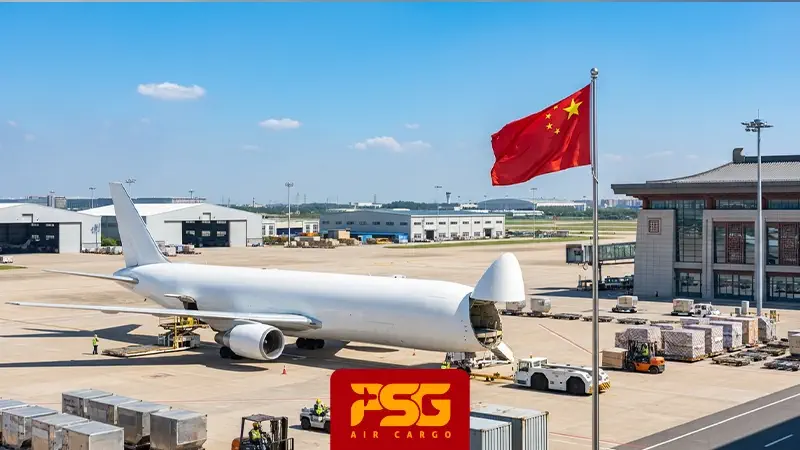
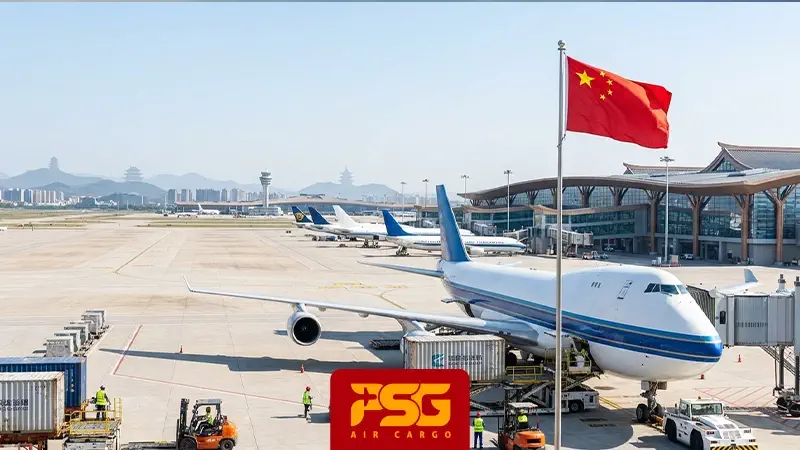
Major Chinese airports such as PVG (Shanghai), CAN (Guangzhou), and SZX (Shenzhen) are among the busiest airports in the world, and transportation from these airports can at times cause cargo to be delayed. And here are common reasons for delays:
- Weather adverse
- Security concerns
- Cargo congestion at airport warehouses
- Aircraft shortages or loading restrictions
- Peak global online shopping season
These delays are especially troublesome for urgent orders.
5. Lack of transparency in cargo tracking
This causes concern for importers and exporters and makes it impossible to plan properly. In many unreliable companies, Cargo information is announced with a delay, and they use fake AWB numbers.
6. Hidden and unexpected costs
Unfortunately, in the shipping market from China, there are companies that offer low initial rates but later add the following costs:
- Warehousing costs
- Packaging costs
- Domestic transportation costs to the airport
- Documentation costs
- Unforeseen customs costs
The lack of financial transparency is one of the biggest problems in this industry.
7. Problems with transporting bulky cargoes with high volumetric weight
In air transport, the calculation is based on dimensional or actual weight, whichever is greater. This problem mostly occurs for goods such as household appliances, lightweight, and oversized boxes.
8. Language Barriers
Contrary to popular belief, many customs personnel, warehouse personnel, drivers, and even some warehousemen in China lack sufficient English proficiency. This sometimes leads to misunderstandings and coordination errors. leading to the following issues.
- Mistakes in labeling and packaging
- Errors in scheduling and coordination can cause delays
- Problem in translating commercial documents
9. Infrastructure limitations outside China’s urban centers
Many Chinese factories and suppliers are located in large cities, but many also operate in remote areas. These areas often lack the same transportation infrastructure as large centers, leading to the following issues.
- Lack of Domestic Transport Fleet
- Poor roads or traffic restrictions (Some industrial areas in China have narrow or heavy roads, which can increase cargo transport time)
- Long distance to international airports
- Lack of standard warehouses
- Inconsistent security standards
Smart and Practical Solutions to Manage Challenges
After identifying the most important issues, it is time to work on the best practical solutions, the ones that professional importers always use.
1. Choose a reputable shipping company with a formal contract and a traceable track record
The most important and effective factor for success is choosing the right company. Reputable companies:
- Offer more reasonable rates
- Have a written contract
- Offer an online tracking system
- Have a professional team for packaging and customs
2. Smart planning before busy seasons
To manage costs and time:
- Divide the cargo volume into several stages
- Avoid shipping high-risk cargo during peak demand times
- Coordinate everything in advance
3. Use combined shipping methods
To reduce costs and time, combined methods are highly effective and enable special goods to be shipped with lower risk.
4. Specialized packaging according to air standards
In addition to preventing damage, proper packaging reduces the risk of customs problems. Standard packages must:
- Have warning labels
- Have the exact weight on it
- Be packaged with foam, multi-layer cardboard, or wooden boxes
- Goods with batteries must be labeled separately
Non-standard packaging is one of the main reasons cargo is stopped at the airport.
5. Provide accurate and complete documents
The invoice and packing list must be completely transparent, including the following information.
- Type of goods
- Quantity
- Actual value
- Exact weight and volume
Lack of transparency in documents makes customs suspicious and causes long delays, unexpected costs, and even fines.
6. Use online tracking and automation systems
Professional companies use the following tracking tools, such as online tracking systems, SMS, or email notifications of steps, issuance of official AWB number, and real-time cargo status report. Using all of which creates complete transparency.
7. Sign Medium-term freight contracts for price stability
It is better to sign contracts between 1 and 3 months to avoid sudden rate increases and to secure a fixed price.
8. Insure cargo to prevent major losses
International insurance does not cost much, but it helps avoid potential damage and loss. For expensive goods such as laptops, watches, mobile phones, electronics, medical supplies, insurance is essential.
9. Work with transportation companies with an active office in China
These companies usually use their in-house translator and have experience working with Chinese factories.
10. Use stronger packaging for domestic routes
On domestic routes in China, especially non-urban roads, stronger packaging is necessary.
11. Use a shipping company that has a logistics network throughout China
Professional companies usually have networks of agents and warehouses in smaller cities and can handle domestic transportation more quickly and cheaply.
Final Thoughts
Air freight from China is a powerful mode of transportation, but without understanding the challenges and careful planning, it can be costly and complicated. Therefore, individuals involved in logistics need a comprehensive understanding of each step of the shipment process; otherwise, unexpected issues such as price fluctuations, commodity restrictions, customs issues, flight delays, and a lack of tracking transparency may arise. But using smart solutions can mitigate these potential issues. Choosing a reputable company, standard packaging, long-term contracts, professional tracking systems, and planning before peak seasons can help prevent these challenges. PSG Air Cargo is one of the most reputable and reliable logistics partners, assisting businesses to achieve smooth air cargo transportation from China, reducing the impact of potential challenges by offering suitable solutions. This company provides proper management to ensure fast, safe, and secure shipments.
FAQs
How long does it take to air freight from China to the UAE?
It depends. During peak seasons, it takes longer than normal.
How to make sure the airwaybill is valid?
The waybill must be traceable. Reputable companies issue official waybills and display the loading, flight, and clearance stages in their online system.
Is it necessary to use air freight insurance?
It is recommended, especially for valuable goods. It helps prevent potential losses.



Leave a Reply
Want to join the discussion?Feel free to contribute!