
Customs Duties in the UAE stand out as a major trade and transit hub in the Middle East. Therefore, if you trade goods internationally or work in logistics, it is crucial to understand how customs duties, VAT, exemptions, and free zone regulations affect operations in the UAE. Staying updated helps you keep costs down and your supply chain running smoothly. This article explains all the details and offers practical, straightforward advice for businesses.
Standard Customs Duty Rates in the UAE
Most goods brought into the UAE are charged a 5% customs duty, calculated on the total value of the goods, including insurance and shipping costs to the port, known as the CIF value. This standard rate covers items such as electronics, clothing, household appliances, industrial components, and similar items. However, some products may face higher tariffs due to regulations or health policies. Besides that, basic food items (fruits, vegetables, grains), medicines, medical supplies, and other essentials may be exempt from duty depending on their classification under the Harmonized System (HS) tariff code. This means accuracy in goods classification is essential, and if you pick the wrong code, you might pay the wrong duty, face delays, or even get penalized.
The calculation is as follows:
Start with the CIF value, calculate 5% duty, add that to the CIF, and then apply 5% VAT to the new total.
Required Documents for Customs Clearance in the UAE
It is essential to know that if the imported/ exported goods are restricted or labeled as sensitive goods, you need additional permits and documents from the relevant UAE authority, such as the Ministry of Health or the Environment Authority.
Additionally, if the goods are imported or exported through a Free Zone, they may require additional certificates and permits. Below is a list of the common documents:
- Commercial Invoice: indicating the price, quantity, description of the goods, and the buyer/seller.
- Packing List: including weight, dimensions, number of packages, contents, reference numbers, etc.
- Bill of Lading (for sea freight) or Airway Bill (for air freight): a document from the shipping company showing that the goods have been loaded and transported.
- Certificate of Origin: indicating the country where the goods were produced; in some cases, tariff reductions or exemptions may be dependent on this document.
- Copy of the Trade License / Company Registration of the importing or exporting company, if you have an official business activity.
- Customer Code / Customs Client Code, for registering the declaration in the customs system.
- Customs Declaration, which is registered through the official customs system.
Free Zones and Duty Exemptions
One of the advantages of trading in the UAE, especially for international importers and exporters, is the presence of free zones. Several Free zones in the UAE offer the benefits. Here is a list of those benefits.
- Goods that only enter a free zone (and are not transported to the mainland) are usually duty-free.
- Some free zones even have special provisions for VAT; if the goods remain in the free zone or are directly for export, VAT may not be charged.
- This structure is beneficial for companies that do transit trade, repackaging, warehousing, and re-export.
Therefore, if the imported goods are not produced for the UAE market and are merely passing through or being re-exported, it is more cost-effective to send them directly to a free zone rather than the mainland.
Customs Clearance Cost in the UAE
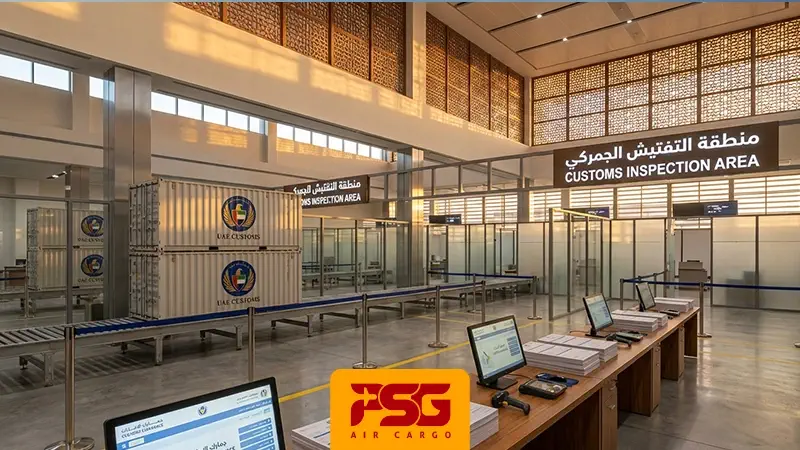
Various steps and factors are involved in clearing goods in the UAE. Knowing these costs helps importers and exporters make informed decisions and minimize expenses. The following are the estimated costs:
- Customs Costs: These costs include taxes and customs duties. The type and value of the goods, as well as the customs rate, affect these costs.
- Insurance costs: For the transportation of goods, cargo insurance is usually required for international transportation. Insurance costs are generally calculated based on the value and type of goods.
- Documentation costs: Costs associated with preparing and verifying documents, including invoices, bills of lading, insurance policies, and certificates.
Advantages of Clearing Goods from the UAE
Companies and individuals involved in global or regional trade can benefit from clearing their goods through the UAE. Here are the advantages of the customs clearance process in the UAE.
- Very High Speed in Clearance
- UAE Customs Advanced Digital Systems
- Many goods are cleared in less than 24 hours
- Competitive Costs
- UAE customs tariffs are relatively low
- Warehousing, unloading, and loading costs are more affordable than in many countries.
- Strong port and logistics infrastructure
- Extensive shipping and air routes make transportation fast and reliable.
- Possibility of clearance in the Free Zone
- In free zones, goods can be stored, packaged, and even re-exported without paying customs.
- It is very cost-effective for companies that engage in re-export.
- Ease of import and re-export
- Dubai is the regional trade hub; many companies import goods from China/Europe and export from Dubai.
- Transparent and predictable rules
- The UAE customs system is very transparent, and the risk of delays, fines, and administrative problems is low.
- The possibility of storing goods with high quality and security
- Advanced warehouses, temperature control, heavy warehouses/machinery, and 24-hour security.
- Suitable for exporting machinery and heavy loads
- Possibility of heavy loading with advanced equipment
- Reasonable port fees
The Importance of the HS Code
For expensive, industrial, or specialized goods such as machinery, auto parts, chemicals, or special supplies, it is critical to double-check the new 12-digit HS code and avoid mistakes and unexpected costs. For those new to the trading field or running a small business, it is a smart move to start working with local agents, such as customs brokers or freight forwarders, to support the clearance process and avoid mistakes, ensuring a smooth shipment.
Cost-Cutting Strategies for Customs Duties in the UAE
Below is a list of proven cost management strategies that are advantageous for professional importers and exporters operating in the UAE.
- Accurate CIF valuation: Correctly declaring the cost of goods, freight, and insurance, and providing precise documentation, will prevent customs from re-valuing.
- Accurate financial estimate including VAT: you do not need to calculate the final price of the goods excluding taxes and duties; when you include 5% duties + 5% VAT, the costs increase.
- Consult a local broker or an experienced customs broker, especially for specialized goods and HS Codes, as a professional can help prevent major mistakes.
- The use of free zones for temporary storage or repackaging can be a competitive advantage for companies, leading to lower costs, greater speed, and greater logistics flexibility.
Final Thoughts
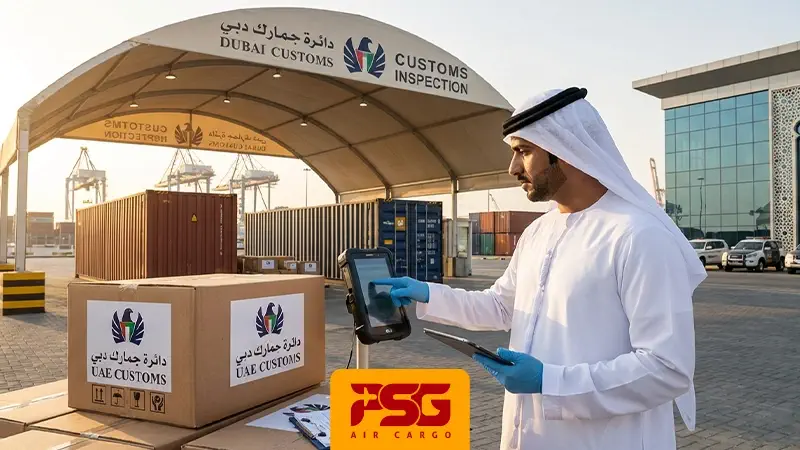
Customs duties in the UAE are among the most important stages for importers, exporters, and individuals working at any point along the supply chain. Therefore, following the steps, tips, and planning taxes and logistics carefully can be the difference that makes your business stand out. For every import, the correct HS Code, the CIF value, and the choice between free zones or mainland clearance are among the biggest concerns. Reliable and reputable logistics partners such as PSG Air Cargo help your businesses minimize risk, cut costs, and smooth trade enforcement.
FAQs
How long does the customs clearance take in the UAE?
If the documents are complete, products can be cleared in less than 48 hours.
Is it possible to clear goods in free zones?
Yes, it is. goods can be stored and re-exported without paying customs duties in Free Zone.
Can goods be re-exported from the UAE to other countries?
Yes, the UAE is one of the largest re-export centers in the world.



Leave a Reply
Want to join the discussion?Feel free to contribute!