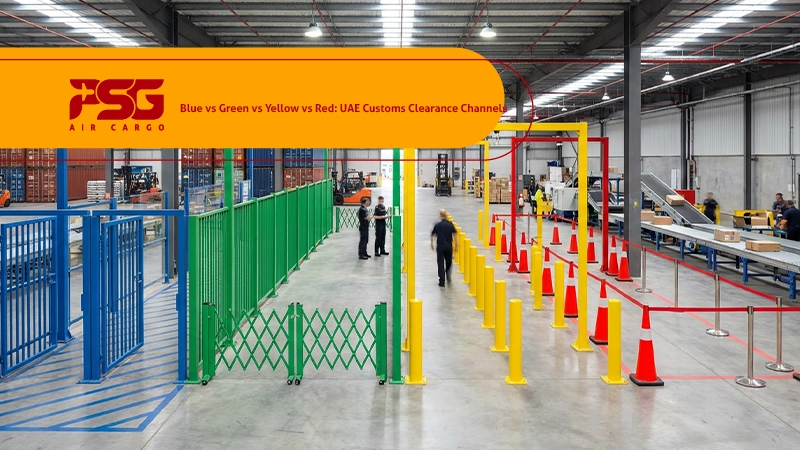
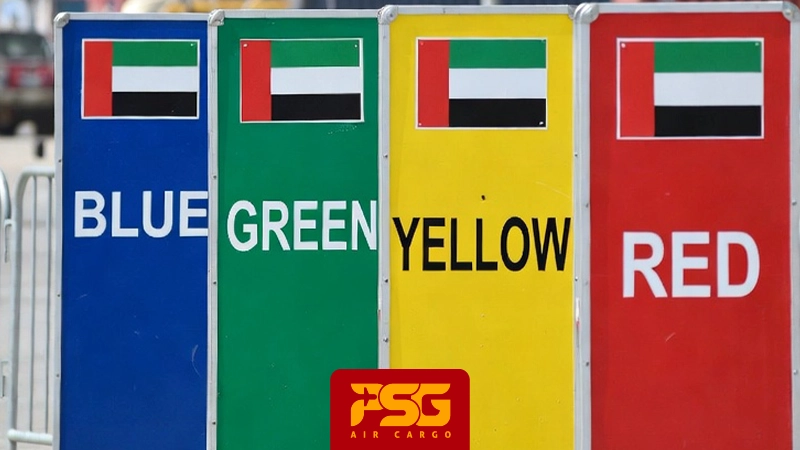
Blue, green, yellow, and red are the four channels in UAE customs clearance. In the United Arab Emirates, the customs system has been developed to be both advanced and detailed, aimed at streamlining the clearance of goods. Customs clearance is recognized as a complex and essential step in the import and export process, often requiring significant time and attention. A notable aspect of the UAE’s customs system is its implementation of a color-coded channel system, blue, green, yellow, and red, each representing different conditions and facilitating varied levels of inspection and processing. This channel system is built on principles of risk assessment and goods classification, enabling smoother, more efficient customs experiences for importers. By enhancing the efficiency of the customs clearance process, the system not only supports trade but also upholds security and transparency standards. The following article analyzes the features and distinctions among these channels and evaluates their impact on customs clearance in the UAE. Additionally, it provides a comprehensive comparison of the channels, enabling importers to navigate better and understand the customs process.
Customs Clearance in the UAE: Different Channels
UAE Customs, recognized as one of the largest and most advanced customs authorities in the region, has developed a streamlined system of clearance channels to enhance the import and export process. These channels, categorised as green, yellow, and red, are designed to classify goods and importers based on their risk and compliance with customs regulations. Each channel has distinct requirements and procedures for customs clearance, enabling importers and traders to expedite their goods’ clearance efficiently and cost-effectively. However, to maximize the benefits of this system, importers must have a thorough understanding of each channel. This includes knowledge of which types of goods must pass through specific channels and the necessary documentation required for clearance. Understanding these aspects can greatly facilitate smoother and more efficient customs procedures.
-
Blue Channel
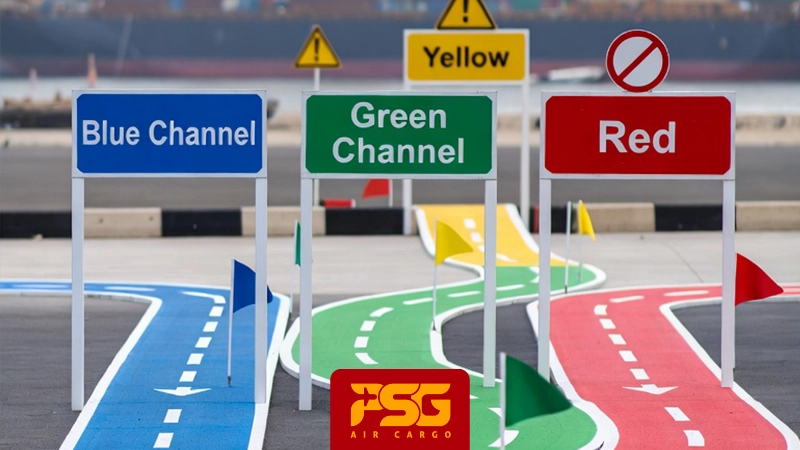
Blue channel is the highest and most advanced level of facilitation in the UAE customs clearance system. This channel is designed specifically for very low-risk, well-established, and trusted companies and traders. Its main goal is to provide immediate clearance for goods with minimal customs intervention. In the Blue Channel, the principle is maximum trust in the importer or exporter, and customs controls are mainly carried out through a post-clearance audit, not before the goods leave. The UAE Customs uses an intelligent risk management system that evaluates shipments based on various factors, including previous clearance history, compliance with declarations, the type of goods, correct valuation, and long-term compliance with laws and regulations. In this system, the blue channel is the lowest-risk level and is even faster and simpler than other channels.
Key features of the Blue Channel
In the blue channel, goods undergo a streamlined customs clearance process that eliminates the necessity for document review or physical inspection before clearance. Instead, all regulatory controls are conducted during the post-clearance stage. The following summarises the main features of the blue channel.
- Post-Clearance audit
In this channel, customs may subsequently review the company’s documents. If any violations are found during this audit, appropriate legal actions will be taken.
- Extremely fast process
The blue channel is known as the fastest clearance route in the UAE. It allows goods to exit customs without stopping, significantly reducing warehousing costs and ensuring a smooth, delay-free supply chain.
- Exclusive access for trusted companies
This channel is not available to all importers; access is limited to companies that meet specific eligibility criteria. Only trusted businesses can benefit from the blue channel.
- Cost Efficiency
The blue channel contributes to a significant reduction in customs and warehousing costs by minimizing the stoppage of goods at ports and airports. This leads to more effective supply chain management.
Which companies can enter the Blue Channel?
To qualify for entry into the Blue Channel, companies typically need to demonstrate a strong and transparent track record in international trade. Key criteria include a clean record free from customs violations, accurate declarations of both the value and tariff classifications of goods, and a reliable accounting and documentation system. Additionally, companies must have a history of full cooperation with customs authorities during previous inspections.
Required Documents
The examination of essential documents occurs following the clearance process, as customs does not assess these papers during the initial clearance phase. The company must maintain records of all necessary legal documents. These documents should not only be thorough and systematically organized but also readily accessible for audit reviews. Maintaining this level of diligence ensures compliance and reinforces the company’s commitment to regulatory standards, ultimately fostering a smoother operational flow.
Limitations and Risks
In situations where violations come to light during the post-clearance audit, the repercussions can be notably more severe than initially anticipated. Furthermore, there is a significant risk of forfeiting the valuable blue channel privilege, especially in cases of repeated offences. Such consequences not only jeopardise operational efficiency but also raise important concerns regarding compliance and accountability in the process.
Green Channel
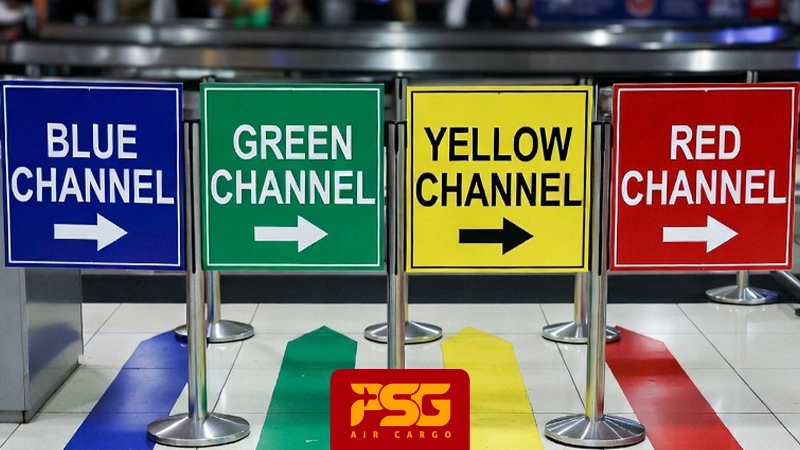
The green channel is one of the most important and widely used clearance channels at UAE Customs. This channel is intended for shipments assessed as low risk by the Customs Risk Management System, but unlike the Blue channel, they are still subject to systemic control before clearance. In the green channel, the principle is speed with minimal control: customs checks documents electronically before clearance, and there is usually no need to inspect the goods physically. The UAE Customs smart system evaluates shipments based on factors such as the type and nature of the goods, the importer or exporter’s records, the accuracy of previous declarations, the value and declared tariff, the country of origin and destination, and the regulatory sensitivity of the goods. If the assessment indicates low risk, the shipment is directed to the green channel. It is important to know that the green channel is the fastest and easiest clearance route after the blue channel.
Main features of the green channel
- No Physical Inspection of Goods
In the green channel, the cargo seal remains intact, eliminating the need for a physical inspection. This streamlined process helps minimize the time that goods are held up.
- Systematic and Electronic Review of Documents
In contrast to the blue channel, the green channel involves a thorough review of commercial and customs documents before clearance.
- Systematically and Digitally Managed
If all submitted documents are accurate, complete, and free of discrepancies, a clearance permit is promptly issued. This makes the green channel process simpler than those in the yellow and red channels.
- High Speed of Clearance
The green channel is designed for quick clearance, significantly reducing warehousing costs. This efficiency ensures that logistics operations can proceed without delays, making the green channel a preferred option for many professional importers.
What goods enter the green channel?
The green channel is designated for specific types of goods that typically encounter fewer regulatory hurdles.
- General and non-sensitive goods
- Shipments with complete and transparent documents
- Goods that do not require complex special permits
- Shipments belonging to well-established companies
These criteria help facilitate smoother customs processes for eligible goods.
Required documents and limitations
In the green channel, the review process for documents is streamlined rather than eliminated. This category includes essential documents such as customs declarations, commercial invoices, packing lists, shipping documents, and required permits. However, it is important to note that while the green channel facilitates easier processing, it does not eliminate oversight. Should any discrepancies arise during the system review, the shipment may be swiftly reassigned to the yellow or red channel for further scrutiny. Additionally, certain types of goods are inherently excluded from the green channel and will not qualify for this simplified review process. This serves as a reminder that careful attention to documentation is crucial, as any errors can result in a change of review channel.
Yellow Channel
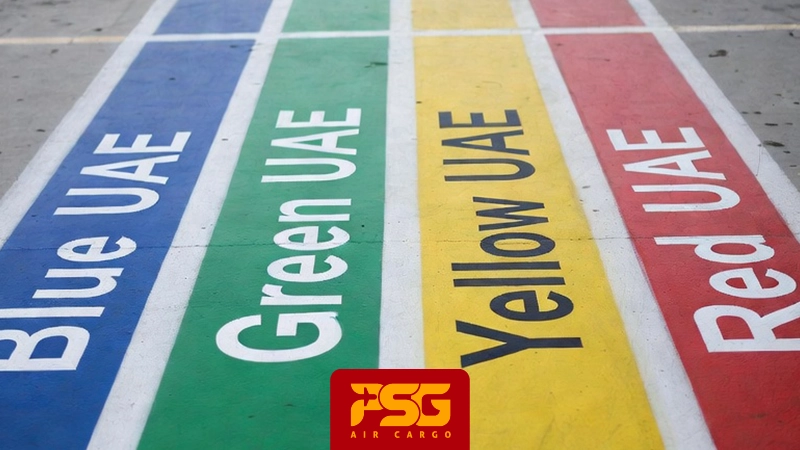
The yellow channel is a medium-risk channel in the UAE Customs Risk Management System. This channel is intended for shipments that require more detailed documentation from a customs perspective but are not yet high enough to warrant a full physical inspection. In the yellow channel, the main focus of customs is on pre-clearance documentary control and not on opening or physically inspecting the goods. In terms of control level and clearance time, the yellow channel falls between the green and red channels. It plays a very important role in balancing clearance speed and supervisory accuracy and is one of the most widely used customs tools to prevent documentary errors and incorrect valuation.
Main features of the yellow channel
- In the yellow channel, customs experts meticulously review all commercial and customs documents. This evaluation focuses on several key aspects, including the declared value of goods, the tariff code (HS Code), the country of origin, and the alignment of the invoice with the packing list.
- Typically, containers or their cargo are not subjected to physical inspection unless the provided documents are ambiguous. In such cases, the shipment may be moved to the red channel for further scrutiny.
- The average clearance time for shipments in the yellow channel is generally slower than in the green channel but faster than in the red channel. The duration of clearance in this category is significantly influenced by the quality of the documentation and the importer’s responsiveness.
What shipments enter the yellow channel?
In the context of goods entering the country, specific categories are designated to join the yellow channel. This includes high-value items, shipments subject to sensitive tariffs, and goods that necessitate a license for importation. Furthermore, the yellow channel is also used by importers with limited to moderate experience, as well as for randomly selected shipments to be inspected.
Required documents and limitations
The fundamental documentation needed remains consistent across various channels. However, when dealing with the yellow channel, importers may be asked to provide further explanations, supporting documentation of the goods’ value, and any necessary corrections or clarifications to their declarations. It is essential to be aware that there is always the potential for a transfer to the red channel. Additionally, any defects or inconsistencies in the submitted documents can delay shipment processing.
Red Channel
The red channel represents the highest level of control and the most stringent clearance route within UAE Customs. It is specifically designated for shipments deemed high risk according to the Customs Risk Management System, as well as those requiring comprehensive documentary verification and physical inspection. In this channel, the focus is on fully verifying all declared information, with clearance granted only once customs is completely assured of the accuracy of the documents, as well as the value, nature, and legal compliance of the goods. The primary goal of the red channel is to prevent customs violations, address any misdeclarations, and effectively manage sensitive or regulated goods.
Main features of the red channel
- Thorough and Accurate Document Review
This channel ensures that customs experts meticulously examine all commercial, shipping, and customs documents. The review process emphasizes several key aspects, including the actual value of goods, accurate tariff classifications, alignment of goods descriptions with the actual shipments, and adherence to any relevant special permits and regulations.
- Extended clearance times
Clearance of goods through the red channel tends to be the most time-intensive due to the necessity for physical inspections, multi-layered checks, and additional approvals. As a result, businesses may also face increased warehousing costs while their goods are under review.
- Potential for fines or value adjustments
In certain circumstances, there may be a requirement to seize or return goods, especially if discrepancies or compliance issues arise during the clearance process.
The red channel is specifically designated for shipments that require additional scrutiny due to various factors. These include:
- Sensitive or regulated goods that must adhere to strict compliance requirements.
- Shipments with discrepancies in their documentation may indicate potential issues during the import process.
- Packages featuring suspicious value declarations or tariff classifications that require further investigation.
- Goods that could pose security or safety risks require careful examination before entering the market.
- Importers with a history of regulatory violations require increased monitoring.
- Random selections for control purposes to ensure a thorough and equitable inspection process across diverse shipments.
These criteria play a crucial role in guaranteeing that all imports comply with necessary standards and regulations.
Required Documents
In the red channel, it is important to submit all fundamental documents just as in other channels, but with an emphasis on enhanced accuracy, detail, and sensitivity. The following documents may be necessary:
- Supplementary valuation documents
- Technical descriptions of the goods
- Specific permits or additional approvals
Providing comprehensive and precise documentation is vital to avoid delays or potential legal issues in the process. Ensuring all submissions meet these standards will contribute to a smoother experience.
How to reduce the likelihood of entering the red channel?
To effectively prevent a shipment from entering the red channel during customs processing, it is crucial to prioritize both the accuracy and transparency of the goods declaration. This involves meticulously detailing the nature, quantity, and value of the goods being imported or exported. Additionally, ensuring that all accompanying documentation, such as invoices, packing lists, and certificates of origin, is complete, compliant with regulations, and properly formatted is essential for a seamless customs experience. Maintaining a customs compliance record is also imperative; this can be achieved by consistently adhering to all applicable laws and regulations, which fosters trust and reliability with customs authorities. Furthermore, being proactive in responding to any requests for additional information or clarification from customs officials can substantially mitigate the risk of a shipment being flagged for further inspection. Engaging in thorough pre-shipment checks and building strong rapport with customs brokers can further increase the likelihood of a smooth customs clearance. By diligently following these best practices, businesses can significantly streamline their customs operations and reduce the possibility of delays or complications.
UAE Customs Channel Comparison Table
As the process shifts from the blue channel to the red channel, several key changes occur. There is an increase in control levels, a decrease in clearance speed, and a rise in associated risks and additional costs. This system is specifically designed to support UAE Customs in achieving a balance between facilitating smooth trade operations and maintaining effective legal oversight.
| Comparison Criteria | Blue Channel | Green Channel | Yellow Channel | Red Channel |
| Risk level | Very Low | Low | Medium | High |
| Customs confidence level | Maximum | High | Medium | Low |
| Pre-clearance document review | None | Yes | Yes | Yes |
| Physical inspection of goods | None | None | Usually None | Yes |
| Post-clearance control | Main and extensive | Limited | Limited | Usually none |
| Clearance speed | Very fast | Fast | Medium | Slow |
| Delay time of goods at customs | Minimum | Low | Medium | High |
| Type of goods | Low-risk and repetitive | General and non-sensitive | High-value or sensitive documents | special, or subject to regulations |
| Aditional costs | Minimum | Low | Medium | High |
| The main goal of the channel | Maximum facilitation of trade | Balance of speed and control | Document control | Complete and secure control |
This comparison of customs channels illustrates the varying levels of risk, control, and operational efficiency for each channel, helping businesses navigate customs processes effectively.
Understanding the UAE Customs Clearance Channels and Their Business Impact
From a strategic perspective, understanding the performance and conditions of each customs channel is crucial for business operators. This knowledge enables effective planning, risk mitigation, and anticipation of the clearance process. The UAE Customs four-channel system simplifies and streamlines this process and is recognized as a benchmark for advanced risk management and international customs standards, positioning it as a potential model for other countries. Ultimately, leveraging this intelligent system enables companies to expand their operations with confidence, speed, and lower costs, while ensuring regulatory compliance and avoiding legal issues.
In summary, the blue channel at UAE Customs represents the Customs authorities’ complete trust in the economic operator. Designed for companies that have demonstrated consistent compliance, transparency, and proper performance over time, utilizing the blue channel can provide a competitive advantage in international trade. However, it demands a high level of accuracy, discipline, and responsibility.
The green channel at UAE Customs serves as the standard fast-track clearance route for low-risk shipments. This channel strikes a smart balance between speed, control, and security, making it the most common mode of clearance for professional importers. To maintain access to this channel, careful document preparation and a positive track record are essential.
The yellow channel at UAE Customs offers a balance between speed and oversight. It is designed to ensure document accuracy, proper valuation, and regulatory compliance, playing a vital role in maintaining trade transparency. By providing accurate documentation and responding swiftly, the time required for clearance in this channel can be minimized.
Finally, the red channel at UAE Customs serves as the primary tool for stringent control and oversight. Although it is more time-consuming and costly, this channel is essential for ensuring full regulatory compliance. Proper document management and compliance with legal requirements are crucial for expediting passage through this channel.
Final Thoughts
Blue, green, yellow, and red: the UAE customs channels are categorized into four colours. This colour-coded system provides a smart, systematic approach to risk management, regulatory control, and the facilitation of international trade. It allows customs officials to evaluate shipments based on risk level, the importer’s history, and the type of goods involved, thereby optimising the clearance process. The main goal of this system is to achieve an equilibrium between the speed of customs clearance and the accuracy of monitoring processes. It facilitates the smooth flow of trade by minimizing unnecessary delays, all while ensuring adherence to applicable laws and regulations. Shipments are categorized according to their risk profiles and the level of examination required. Each color designation indicates the degree of customs control and oversight associated with the shipment. For importers and exporters, this categorisation significantly helps manage clearance times, associated costs, and the potential risks of delays or legal complications. PSG Air Cargo specializes in efficient customs clearance services in the United Arab Emirates, supporting businesses across various industries and operational scales. The company also provides a complimentary consultation for those looking to import or export goods, helping ensure a streamlined, personalized process tailored to each client’s specific needs.
FAQs
Do all goods have to go through one of these channels?
Yes. Even goods that do not have any customs issues must follow the designated route.
Is the customs channel system used only in a specific country?
No, but the details and rules may vary from country to country.
What happens if goods are placed in the wrong channel?
It may be necessary to update the documentation or take additional steps to resolve the issue, which can delay the customs process.



Leave a Reply
Want to join the discussion?Feel free to contribute!